
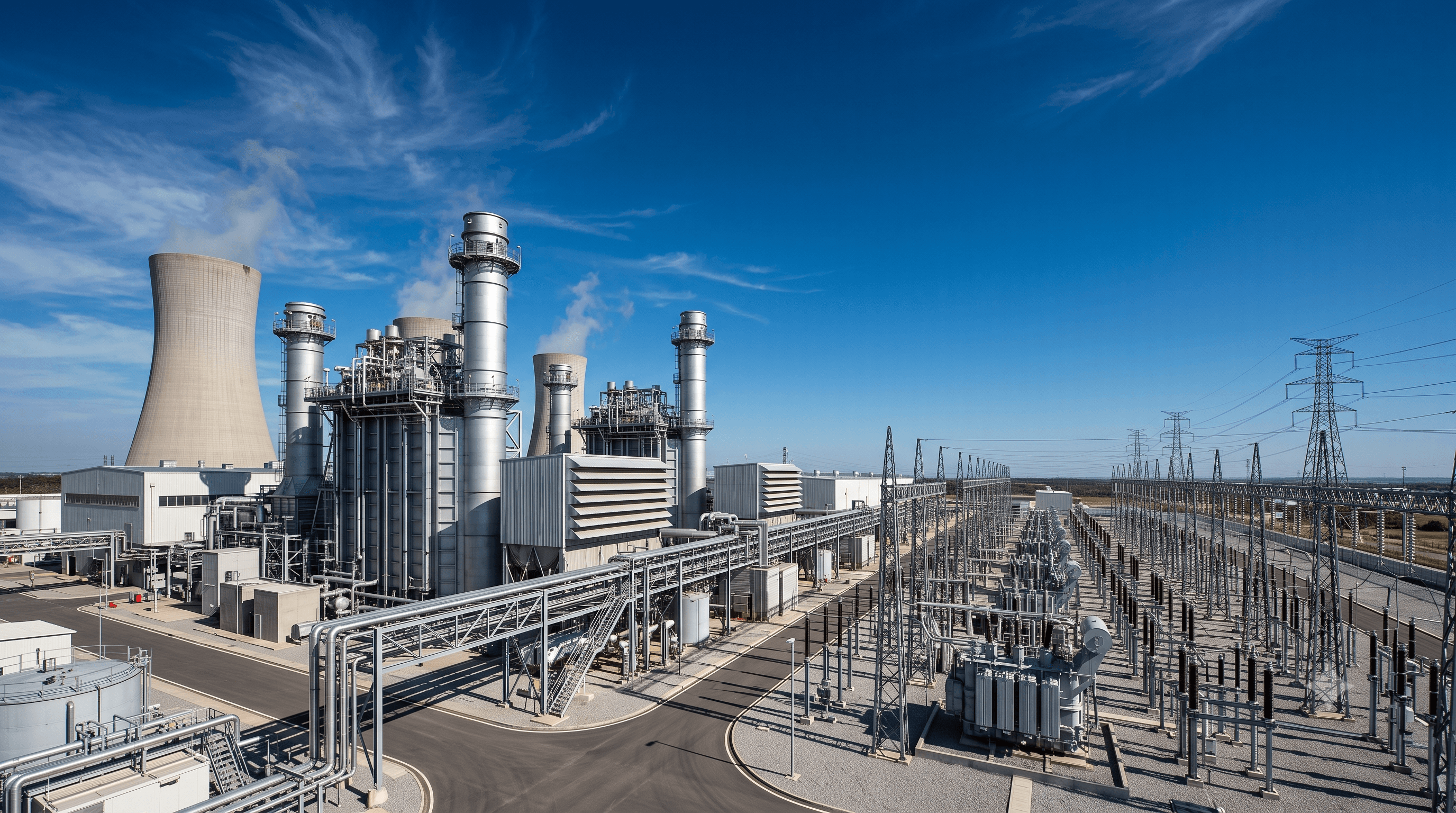
Your plant runs on a dispatch order. Is the order economically optimal?
Unit commitment, ramping, and reserve-versus-energy are decided hour by hour against a market price. Small lags between the merit order and the real economics compound into a large annual gap.
One economic decision engine, applied across the entire energy value chain — from oil & gas and power generation to renewables, storage, grids and hydrogen.
A unit that runs flat through the peak sells its best hours at an average price.
So does every hour offline while scarcity prices print. Both are calculable — before you commit.
The market re-ranks your unit every hour. A fixed schedule can't answer a moving rank.
The marginal price tells you exactly when a MWh is worth double. Is anyone listening?
Three decision-gap patterns in power generation
Unit commitment lagging the merit order
Committing or holding a unit an hour late — or early — sells energy at the wrong margin. The plant meets its MW target and still leaves money on the table.
Ramp cost ignored in the decision
Ramping fast to chase a peak has a fuel and wear cost. When that cost isn't priced against the captured margin, aggressive ramps quietly lose money.
Must-run hours at low or negative margin
Running through low-price hours to avoid a shutdown can cost more than the shutdown-restart cycle would. Nobody prices the two paths side by side.
The same engine. Your sector.
Every decision is a transparent, auditable calculation against published market prices. No black box. No fabricated results.
Ingest
Existing asset telemetry via SCADA/EMS or a file upload — no hardware to replace.
Align
Against published market signals — marginal price, scarcity, demand.
Replay
Every decision is replayed against what the economically optimal one would have been that hour.
Quantify
The economic decision gap in your currency — cited to official sources, independently verifiable.
The economic decisions specific to power generation
Price-aware unit commitment
Commit and de-commit on the hourly margin, not a day-ahead assumption.
Ramp-cost-aware dispatch
Weigh ramp fuel and wear against the margin the ramp captures.
Start/stop timing
Price the shutdown-restart cycle against holding through low hours.
Reserve-vs-energy allocation
Hold capacity for reserve only when energy value is lower.
A Decision Gap report — for your asset
Baseline — what your asset actually earned against real market prices, hour by hour.
Shadow run — the same decisions replayed with price-first logic.
Decision gap — the difference in OMR, broken down by leak type.
Top 20 actions ranked by OMR — date, hour, action taken vs. recommended.
Recovery roadmap — what captures each leak, with no software lock-in implied.
Frequently asked
Isn't this what our dispatch optimizer does?
Dispatch optimizers schedule to meet load and constraints. We measure, after the fact and in OMR, how far each decision was from the economic optimum — then close that gap.
What data do you need?
One month of hourly unit dispatch and output. We align it to published market prices and return the decision gap by hour.
How much is your power generation leaving on the table?
Scarcity hours pay for the whole quarter — and they never announce themselves in advance.
Free 7-day diagnostic with a written guarantee — if we find no recoverable value, you pay nothing.